The Central Arctic Ocean covers 14 million km², more than five times the size of the Mediterranean Sea. It's the only polar ocean on the planet, and paradoxically one of the least documented. Until now, no scientific expedition has managed to conduct continuous observation there over a full year. Campaigns have always been limited to a single season, usually summer, when navigation conditions allow it. The concrete result: we still don't know how the plankton, fish or marine mammals living there make it through six months of polar night, or how this ecosystem actually responds from one season to the next.

Tara Polaris I
Tara Polaris I:Assessing the Central Arctic Ocean's health
The Central Arctic Ocean has never been observed over a complete 12-month cycle. We still don't know how life there survives the six months of polar night. Yet this ocean is warming 3 to 4 times faster than the rest of the planet, and the IPCC predicts summer sea ice will disappear by 2045. Tara Polaris I is setting off for a 9-month winter-over to produce, for the first time, a full diagnosis of this ecosystem. The data will be openly accessible.
9 months
locked in the Arctic sea ice
220
scientific protocols over a full annual cycle
12 countries
30 institutions and 34 laboratories mobilised
What we still don't know
The Central Arctic Ocean has never been observed over a full twelve-month cycle. No one knows how life there survives the six months of polar night, or how the ecosystem actually responds from one season to the next.
What Tara Polaris I will deliver
Nine months locked in the sea ice, 220 scientific protocols repeated over a full annual cycle, and open-access data to refine European climate models.
We can't protect what we don't measure.
The Arctic faces growing pressure (shipping routes opening up, contested resources, eight bordering countries with sometimes conflicting interests), yet decisions affecting it are still made blind, without complete data on this ocean's actual state.
Tara Polaris I was designed to close exactly that gap. Concretely, your donation funds:
A complete 9-month winter-over with 12 people on board, 6 of them scientists
220 scientific protocols repeated over a full annual cycle, a world first
Openly accessible data to help refine European climate models by 2050
The last ocean we've never truly observed
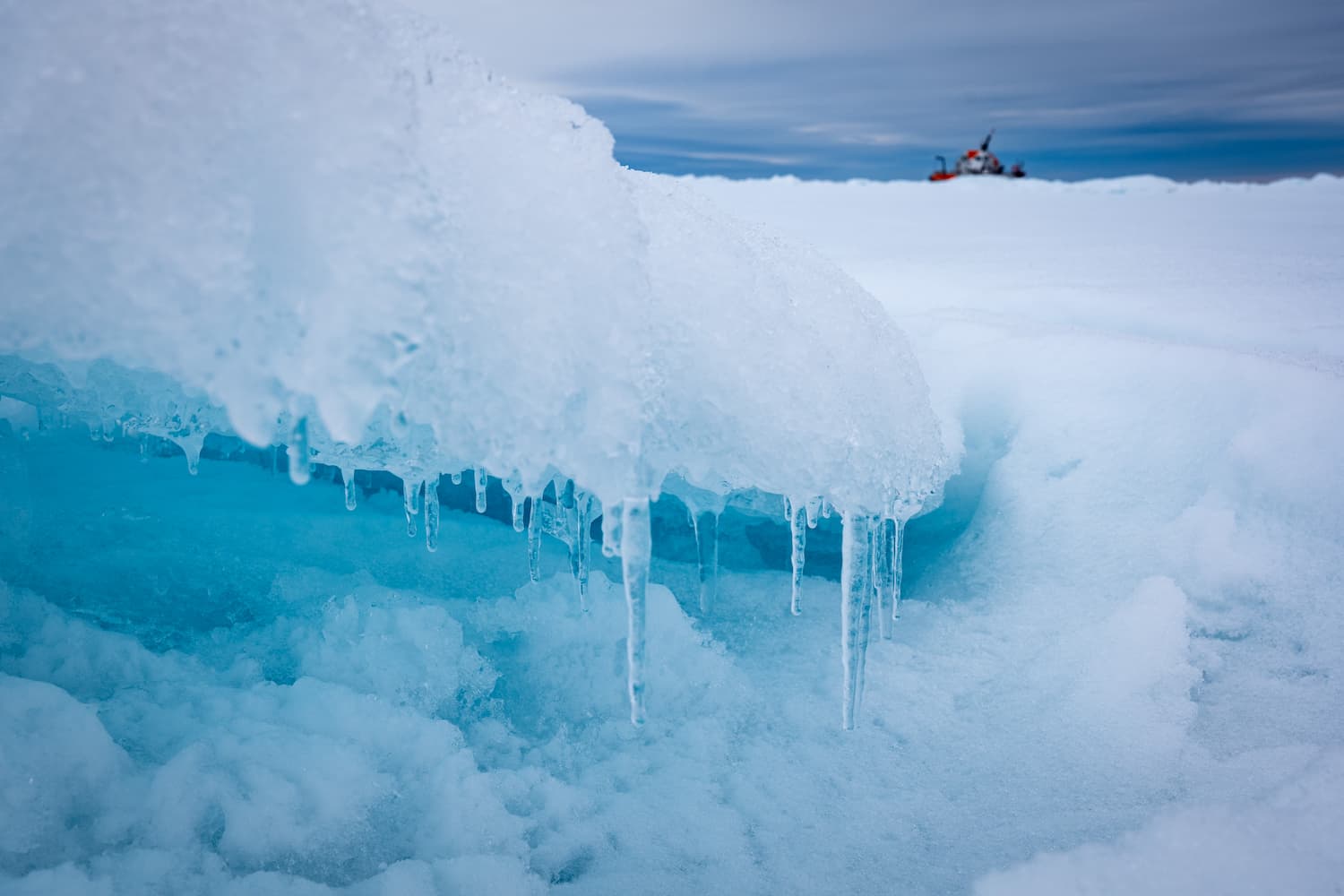
Two mechanisms transforming this ocean at high speed
This scientific blind spot has become urgent to fill for one precise reason: the Central Arctic Ocean is warming 3 to 4 times faster than the global average. This is known as Arctic amplification. A second phenomenon, atlantification, is reshaping the very structure of this ocean: warmer, saltier Atlantic waters are rising toward the surface and disrupting the natural stratification that used to protect the cold Arctic waters beneath.
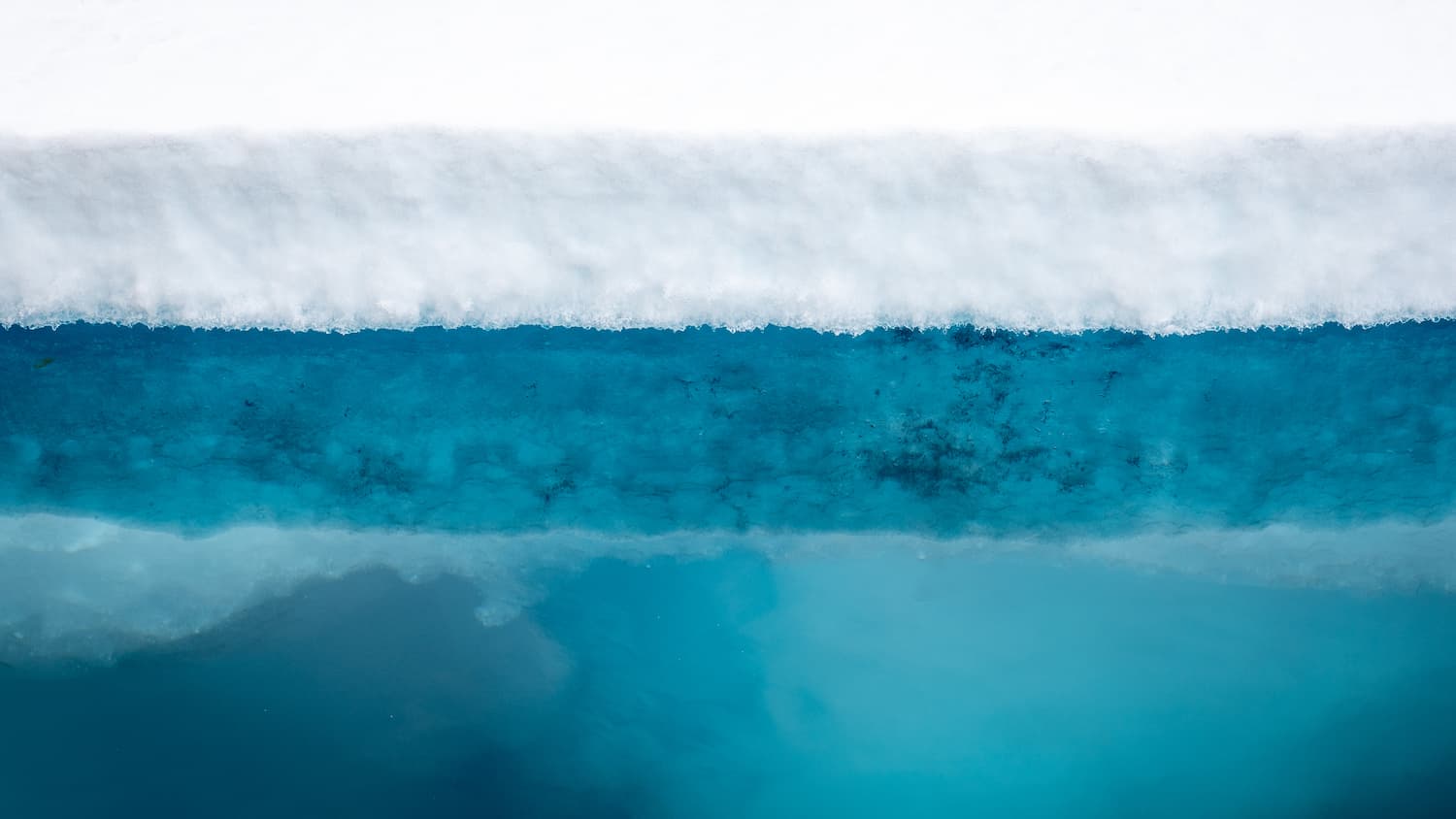
The measurable consequence: sea ice, which averaged around 3 metres thick in the 1980s, now averages just 1.5 metres. According to the IPCC, it could nearly disappear in summer by 2045.
Key figures
14 million km²
the size of the Central Arctic Ocean
3 to 4 times
how much faster it is warming than the global average
1.5 m
average sea ice thickness today, against 3 m in the 1980s
2045
the year summer sea ice could have nearly disappeared, according to the IPCC
Why this lack of data is a real problem
The Arctic faces growing environmental, geopolitical and economic pressure: shipping routes opening up, resources becoming accessible, eight bordering countries with sometimes conflicting interests. Yet the political and industrial decisions being made there today are made without complete data on the actual state of this ocean. We're regulating a territory we barely understand, right as it's changing faster than ever.

What Tara Polaris I will actually measure
Tara Polaris I is the first expedition of a 20-year programme, Tara Polaris (2026-2046), which plans 10 consecutive winter-overs through 2046. Twelve people, six of them scientists, will spend around 9 months locked in the ice, aboard a drifting base 26 metres long and 16 metres wide, designed to withstand ice pressure. The crew will have a direct video link to the Maritime Medical Consultation Centre in Toulouse. Headcount rises to 18 in spring and summer.
On the agenda: 220 scientific protocols repeated over a full annual cycle, to study the atmosphere, sea ice and ocean together, continuously, for the first time. An unprecedented mobilisation of 30 institutions, 34 laboratories and 12 countries makes this expedition possible: CNRS, CNES, ESA, Laval University, the Alfred Wegener Institute, EMBL, among others.
The data collected will be openly accessible, to refine European climate models through 2050 and inform Arctic governance policy.
© Maéva Bardy / Tara Ocean Foundation
Follow Tara Polaris I live
The base drifts with the sea ice. Its position and live images from the station are available continuously.
Live mapping and position
Track the base drifting with the sea ice, hour by hour.
© Maéva Bardy / Fondation Tara OcéanSee the live positionPolar station camera
Live images from the polar station, straight from the sea ice.
© Maéva Bardy / Fondation Tara OcéanSee the station liveA full biological cycle, never measured before Tara Polaris I.
Every previous expedition to the Central Arctic Ocean was limited to a single season, usually summer. None had ever tracked this ecosystem continuously over a full year, from polar night through the summer rotations. Tara Polaris I closes that gap through an unprecedented mobilisation: 30 institutions, 34 laboratories and 12 countries, including CNRS, Laval University, the Alfred Wegener Institute, Sorbonne University and ETH Zurich, with support from Prince Albert II of Monaco. The station took 5 years to design and 18 months to build. The Tara Ocean Foundation, created in 2003, holds United Nations Special Observer status.
« We absolutely need observations to better understand the nature of the changes underway in the Arctic. »
Scientific partners

Get the mission's discoveries
An onboard reporter shares the adventure continuously from the sea ice. Images, results and winter-over stories, straight to your inbox.
Frequently asked questions
It directly funds the Tara Polaris I expedition: the onboard scientific equipment, winter-over logistics (food, energy, drinking water production), the scientific team and crew's salaries, and the open-access distribution of the collected data.
Because it's a self-sufficient scientific base operating for 500 days in an extreme environment: 12 tonnes of food on board, 300 litres of drinking water produced per hour, cold rooms going down to -52°C, a high-speed satellite connection provided by Eutelsat, and 6 laboratories equipped for 220 scientific protocols. The average cost of one expedition is 6 million euros.
Tara Polaris (2026-2046) is the overall programme, planned over 20 years with 10 consecutive expeditions. Tara Polaris I (2026-2027) is the very first stage: it's the one your donation is funding today.
Yes, if you're a French tax resident: 66% of your donation is deductible from your income tax (up to 20% of your taxable income), or 75% if you're subject to the IFI wealth tax (capped at €50,000 in tax relief per year, meaning a maximum donation of €66,667).
Departure from Lorient on 19 July 2026, ice lock-in in September 2026, ice release in April 2027, then spring and summer rotations in 2027. The station is designed for 500 days of autonomy.
An onboard reporter shares the adventure continuously via a high-speed satellite connection provided by Eutelsat. News, images and testimonials are relayed on the Foundation's website and social media.
Fund the first year of continuous Arctic observation
Your donation directly funds the 220 scientific protocols repeated in the sea ice across a full annual cycle.
Donations are 66% deductible from French income tax, or 75% under the IFI wealth tax. Tax receipt sent automatically.